
How Attachment Styles Affect Adults with Anxiety
Introduction
Many adults with anxiety quietly carry this question:
“Why do I keep reacting this way in relationships when all I really want is closeness?”
You may notice yourself overthinking texts, replaying conversations, feeling a rush of panic when someone seems distant, or shutting down when conflict starts to feel overwhelming. You might deeply value connection — and still feel like your nervous system won’t let you relax into it.
If this feels familiar, you are not alone.
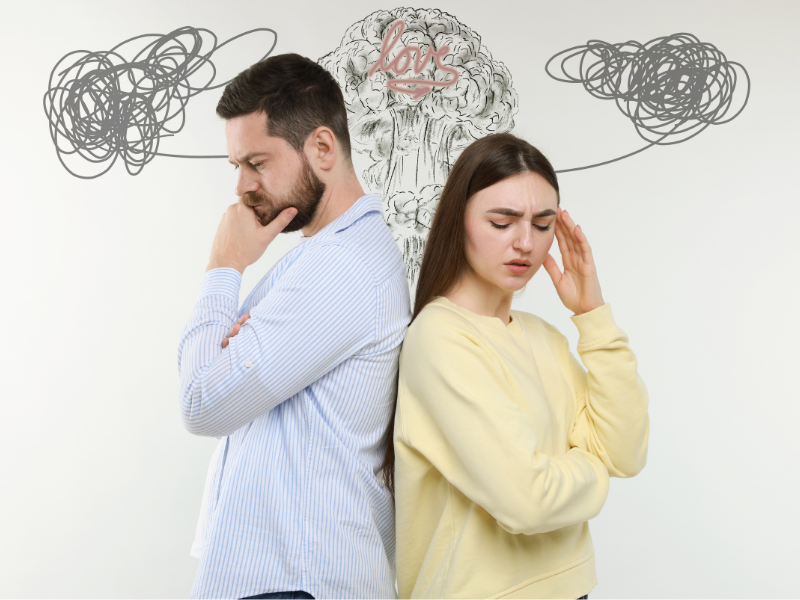
Very often, what we experience as anxiety in adult relationships is connected to our attachment styles — patterns of relating that developed early in life to help us feel safe, loved, and secure.
Understanding attachment styles can be both clarifying and relieving. It shifts the focus from self-blame to self-understanding.
What Attachment Styles Are
Attachment styles are patterns of connection that form in childhood based on our experiences of safety, responsiveness, and emotional attunement from our caregivers.
As children, we depend on caregivers not just for survival, but for co-regulation — someone to soothe distress, repair misattunement, and help us make sense of big feelings. Over time, our nervous systems learn important relational messages:
Is it safe to need someone?
Will someone show up when I’m upset?
Are my feelings welcome?
Does closeness feel steady or unpredictable?
Your attachment style developed as an adaptation to those early experiences.
If connection felt inconsistent, your nervous system may have learned to stay alert.
If emotional needs were minimized, you may have learned to handle things alone.
If relationships felt confusing or frightening at times, your system may have learned to both crave and fear closeness.
Your attachment style is an intelligent survival strategy that helped you stay connected in the best way you could at the time.
The challenge is that the same strategies that once protected you as a child can create difficulties in adult relationships.
Common Attachment Styles in Adult Relationships
While attachment exists on a spectrum, four patterns are commonly described: secure attachment, anxious attachment, avoidant attachment, and disorganized attachment.
Secure Attachment
With secure attachment, closeness generally feels safe. In adult relationships, this can look like:
Expressing needs directly
Trusting that conflict can be repaired
Feeling worthy of love without constant reassurance
Being able to give and receive support
Secure attachment doesn’t mean never feeling anxious. It means your nervous system can move through activation and return to steadiness.
Anxious Attachment
Many adults with anxiety recognize themselves here.
Anxious attachment often develops when caregiving was loving but inconsistent or emotionally unpredictable. In adult relationships, this may show up as:
Overanalyzing tone, timing, or subtle changes
Feeling distressed by distance or delayed responses
Seeking reassurance but feeling ashamed for needing it
Fearing abandonment even in stable relationships
This is not “neediness.” It is a nervous system trying to prevent disconnection..
Avoidant Attachment
Avoidant attachment tends to develop when emotional needs were not consistently welcomed or responded to.
In adult relationships, it may look like:
Discomfort with vulnerability
Pulling back when emotions feel intense
Minimizing your own needs
Feeling overwhelmed by others’ emotional demands
Some adults experience both anxiety and avoidant patterns internally — wanting closeness but feeling flooded by it at the same time.
Avoidance is often a strategy to manage overwhelm, not a lack of care.
Disorganized Attachment
Disorganized attachment can develop when early relationships felt both comforting and frightening at times.
In adult relationships, this may show up as:
Wanting closeness deeply, then feeling afraid of it
Cycling between pursuit and withdrawal
Strong emotional reactions during conflict
Difficulty trusting stability
For adults with relational trauma, this pattern often reflects a nervous system that never fully experienced safe, predictable attachment.
How Attachment Styles Affect Communication and Conflict
Attachment styles strongly influence how we respond to intimacy, reassurance, and conflict.
When a partner pulls away:
Anxious attachment may trigger panic or rumination.
Avoidant attachment may increase emotional distance.
Disorganized attachment may feel destabilizing and confusing.
Secure attachment may feel concern but not threat.
During conflict:
Anxious attachment may escalate in an effort to restore connection.
Avoidant attachment may shut down or disengage.
Disorganized attachment may feel chaotic internally.
Secure attachment allows for repair.
For adults with anxiety, attachment activation can intensify an already sensitive nervous system. This is why “just communicate better” is rarely enough. These are body-based responses shaped by earlier relational experiences.
To change them, the nervous system needs new experiences of safety — not just insight.
Healing Attachment Patterns in Therapy
Attachment styles are patterns, not permanent labels. With support, your nervous system can learn new ways to feel safe in relationships. Therapy offers both understanding and practical tools for this growth.
EMDR (Eye Movement Desensitization and Reprocessing)
EMDR helps the brain reprocess earlier experiences that shaped your attachment style. You can read more about how EMDR works for anxiety in my blog: Eye Movement Desensitization and Reprocessing (EMDR): An Effective Treatment for Anxiety.
Attachment triggers in adult relationships often connect to early moments like:
Feeling unseen
Being criticized for having needs
Experiencing inconsistency or emotional withdrawal
Feeling responsible for keeping the peace
When those memories remain unprocessed, your nervous system continues to react as though the past is happening again.
Through EMDR therapy, we gently process these earlier experiences so they no longer carry the same emotional intensity. As past experiences become integrated, present-day relationships feel less threatening.
You can read more about my approach to EMDR here:
https://www.juliecox.org/trauma-therapy-and-emdr
EMDR is not about reliving trauma. It’s about helping your brain update old relational templates so you can respond to current relationships with more clarity and calm.
How Internal Family Systems Informed Therapy (Parts Work) Supports Attachment Healing
Internal Family Systems Informed Therapy (IFS), or Parts work, is another powerful way to understand attachment styles.
IFS recognizes that we all have “parts” — different aspects of ourselves that developed to protect us.
For example:
An anxious part that scans for signs of rejection
A protective part that shuts down during conflict
A people-pleasing part that works hard to maintain connection
A younger part that still feels afraid of abandonment
Rather than criticizing these parts, IFS helps you approach them with curiosity and compassion.
When your anxious part sends a flurry of worried thoughts, it isn’t trying to sabotage your relationship — it’s trying to keep you safe.
As you build a relationship with these parts internally, something shifts. You develop more access to your core Self — the steady, grounded place inside you that can lead with calm rather than fear.
This internal security supports the growth of secure attachment externally.
Cognitive Behavioral Therapy (CBT)
CBT helps you notice patterns of thought and behavior tied to anxiety and attachment:
Recognizing anxious thinking during relationship triggers
Identifying unhelpful beliefs about closeness or rejection
Practicing more balanced ways of thinking and responding
CBT equips you to regulate anxiety so it doesn’t automatically escalate in relationships.
Dialectical Behavior Therapy (DBT)
DBT focuses on emotional regulation, distress tolerance, and mindful awareness — skills that are especially useful when attachment patterns activate intense anxiety:
Calming the nervous system during conflict
Staying present rather than reacting from fear
Communicating needs effectively without escalating tension
Together, DBT skills help you respond rather than react, even when attachment triggers are strong.
Making Sense of Your Attachment Patterns
If you see yourself in patterns of anxious attachment, avoidant attachment, or relationship cycles that leave you feeling unsettled, there is nothing wrong with you.
Your attachment style formed for a reason.
Anxiety is often the result of a nervous system working very hard to prevent old pain from happening again.
With the right support, those patterns can shift. Secure attachment can grow. Relationships can begin to feel safer.
If attachment styles are impacting your emotional safety, communication, or connection in adult relationships, consider reaching out for therapy support. Healing happens in relationship — and you don’t have to navigate this alone.
Schedule a free 15-minute consultation to explore how therapy can support you in understanding and shifting your attachment style.

Julie Cox, LCSW is a licensed therapist with 25 years of experience supporting children, teens, parents, and adults in New York State. She specializes in trauma and anxiety, using evidence-based approaches including EMDR (Eye Movement Desensitization and Reprocessing), IFS-informed therapy (Internal Family Systems Informed), CBT (Cognitive Behavioral Therapy) and DBT (Dialectical Behavior Therapy) to help clients heal from overwhelm, chronic stress, and the impact of early experiences on the nervous system.
Julie also works with families navigating PANDAS/PANS, offering child and parent-centered support based on co-regulation, nervous system education, and evidence-based approaches that help reduce anxiety, OCD symptoms, and demand-avoidance behaviors. She helps parents feel more empowered and supported while caring for children experiencing neuroinflammatory symptoms.
Julie Cox, LCSW is committed to providing compassionate, expert care for clients across New York State.
.