
Is It Really Resistance? Understanding Treatment Fatigue in PANS Children, Teens, and Young Adults
Have you ever found yourself wondering why your child suddenly seems to resist everything related to treatment?
Maybe they no longer want to talk about PANS.
Maybe they refuse medications or supplements.
Maybe they become angry when you mention an appointment.
Or perhaps they simply say, "I don't care anymore."
For many parents, these reactions can be confusing and even frightening. It's easy to wonder whether your child has stopped trying or whether you're doing something wrong.
But what if it isn't resistance at all?
If You Only Have a Minute, Read This
✓ What looks like resistance may actually be treatment fatigue.
✓ Years of appointments, medications, procedures, and repeated flares can leave a young person's nervous system exhausted.
✓ Pushing harder isn't always the answer.
✓ A trauma-informed, nervous system-informed approach often helps children stay engaged in treatment over the long term.
What Is Treatment Fatigue?
Living with PANS isn't just difficult because of the symptoms.
Many children, teens, and young adults spend years managing medical appointments, trying new medications, recovering from flares, missing out on important experiences, and coping with uncertainty about what comes next.
Over time, this can become emotionally and physically exhausting.
Instead of viewing pushback as noncompliance, it may be more helpful to ask:
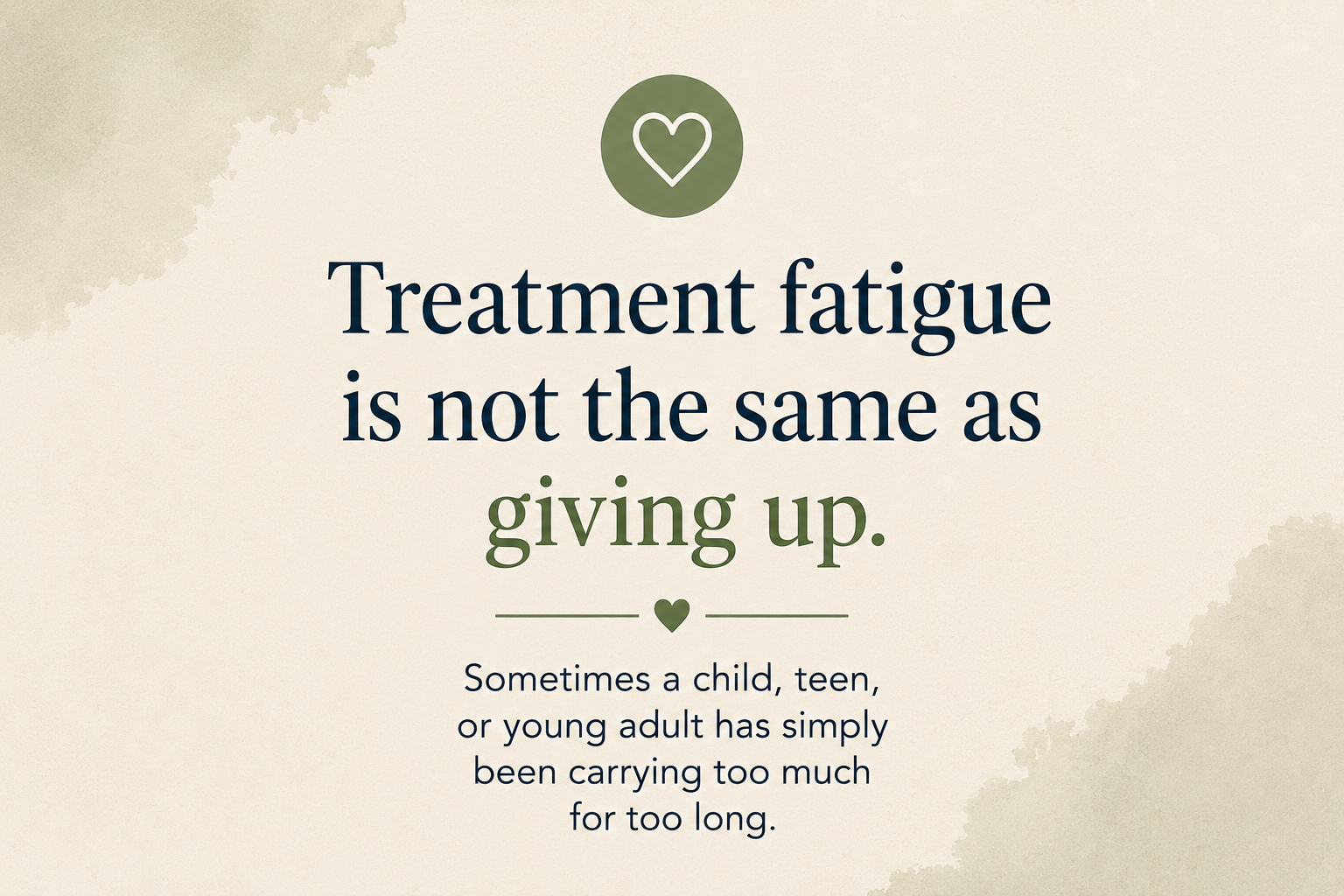
"Has my child simply been carrying too much for too long?"
That shift in perspective can change everything.
A Different Way to Understand Pushback
When we recognize treatment fatigue, our goal shifts.
Instead of trying to increase compliance, we begin thinking about how to reduce overwhelm, restore trust, and help our child feel more in control.
This doesn't mean giving up on treatment.
It means supporting a young person's nervous system so they can remain engaged in treatment in a way that feels manageable.
Read the Full Article
I'm honored to have a new article published by ASPIRE:
Treatment Fatigue in PANS Children, Teens, and Young Adults
In the article, I explore:
• why treatment fatigue develops
• the role of medical trauma and chronic stress
• why pushing harder isn't always the answer
• practical ways caregivers and clinicians can reduce treatment fatigue
• how connection, autonomy, and compassion help young people stay engaged in healing
👉 Read the full article on the ASPIRE website here:
Treatment Fatigue in PANS Children, Teens, and Young Adults
Need Support?
If you're parenting a child, teen, or young adult with PANS/PANDAS, you're carrying a tremendous amount.
You don't have to navigate it alone.
I provide virtual therapy throughout New York State for PANS/PANDAS parents, helping them process the trauma of this journey, reduce chronic stress, and develop compassionate, nervous system-informed strategies for supporting their child.
If you'd like to learn more, you can schedule a free 15-minute consultation by clicking the button below.

Julie Cox, LCSW is a fully licensed therapist with 25 years of experience supporting children, teens, parents, and adults in New York and Delaware.
She specializes in working with families navigating PANDAS and PANS, offering child and parent-centered support based on co-regulation, nervous system education, and evidence-based approaches that help reduce anxiety, OCD symptoms, and demand-avoidance behaviors.
She helps parents feel more empowered and supported while caring for children experiencing neuroinflammatory symptoms.