
PANDAS/PANS Parenting: Am I Helping or Giving In When I Ask Less of My Child?
When your child, teen, or young adult has PANDAS/PANS, everyday expectations can become difficult or impossible to meet. Getting dressed, attending school, completing assignments, or joining a family meal may lead to significant distress.
You may have been encouraged to ease some of those expectations—an approach sometimes called low-demand parenting. But asking less of your child can bring understandable concerns:
“Am I giving in?”
“Will they ever get back to school?”
“Am I making the OCD worse?”
Underneath these questions is often a larger fear: If I step back now, what will my child’s future look like?
What Does Asking Less of Your Child Mean?
It means considering what your child can currently manage and adjusting expectations accordingly. Some activities may need to be simplified, supported differently, or temporarily set aside.
In my work, I use a collaborative approach informed by Ross Greene’s Collaborative & Proactive Solutions model. We explore which expectations the young person struggles to meet and what makes those situations difficult, including their perspective whenever they can share it.
Sometimes families have already made many adjustments. We may be discussing difficult decisions about school attendance, daily routines, or activities their child once enjoyed.
The aim is to reduce overwhelm alongside appropriate medical and therapeutic care, with the hope that greater stability will make participation more manageable.
“Am I Giving In?”
Parents may worry that stepping back teaches their child that becoming upset makes expectations disappear.
We begin by considering whether their child can reliably manage what is being asked. Something they could do before becoming ill—or even last week—may now be much harder.
Whenever possible, we plan adjustments before a situation escalates. This gives parents space to consider what needs attention, what could be approached differently, and what can wait.
Asking less can be a deliberate response to what your child is currently able to manage. Safety, essential care, and the needs of other family members remain part of those decisions.
“Will They Ever Get Back to School?”
Parents are thinking beyond today’s missed assignment or difficult morning. They are worried about friendships, independence, and their child’s future.
I explain that temporarily easing expectations, alongside medical treatment, may help the young person become more stable and available to work on these difficulties. The goal remains greater participation in everyday life.
There are no guarantees about the timeline or outcome. “Temporary” also does not mean everything must return to the way it was by a particular date. We revisit expectations as the young person’s abilities and needs change, involving treating providers and the school team when appropriate.
You may also find Back-to-School Stress With PANDAS/PANS helpful.
“Am I Making the OCD Worse?”
Reducing schoolwork and participating in an OCD ritual are different kinds of support. This distinction matters.
OCD accommodation means changing what you do in response to OCD—for example, repeatedly answering reassurance questions or participating in rituals. Reducing these accommodations is an important treatment goal, but the timing and pace deserve careful consideration.
In my work with PANDAS/PANS families, I consider medical and emotional stability when planning these changes. Some existing accommodations may need to remain temporarily while we establish a manageable treatment plan.
As the young person becomes more able to participate, OCD can be addressed through approaches such as Exposure and Response Prevention (ERP) or Supportive Parenting for Anxious Childhood Emotions (SPACE). SPACE helps parents respond supportively while making planned reductions in accommodation.
Medical and psychological care can happen together. If a young person cannot participate directly, parents can still receive guidance and support.
For more, see When ERP Isn’t Working for Your PANS or PANDAS Child or Teen.
How Do We Know When to Ask a Little More?
We look for a noticeable pattern of improvement over time:
Are difficult episodes happening less often?
Are they less intense?
Do they resolve sooner, or is recovery becoming easier?
Then we consider one small change, rather than bringing back several expectations at once.
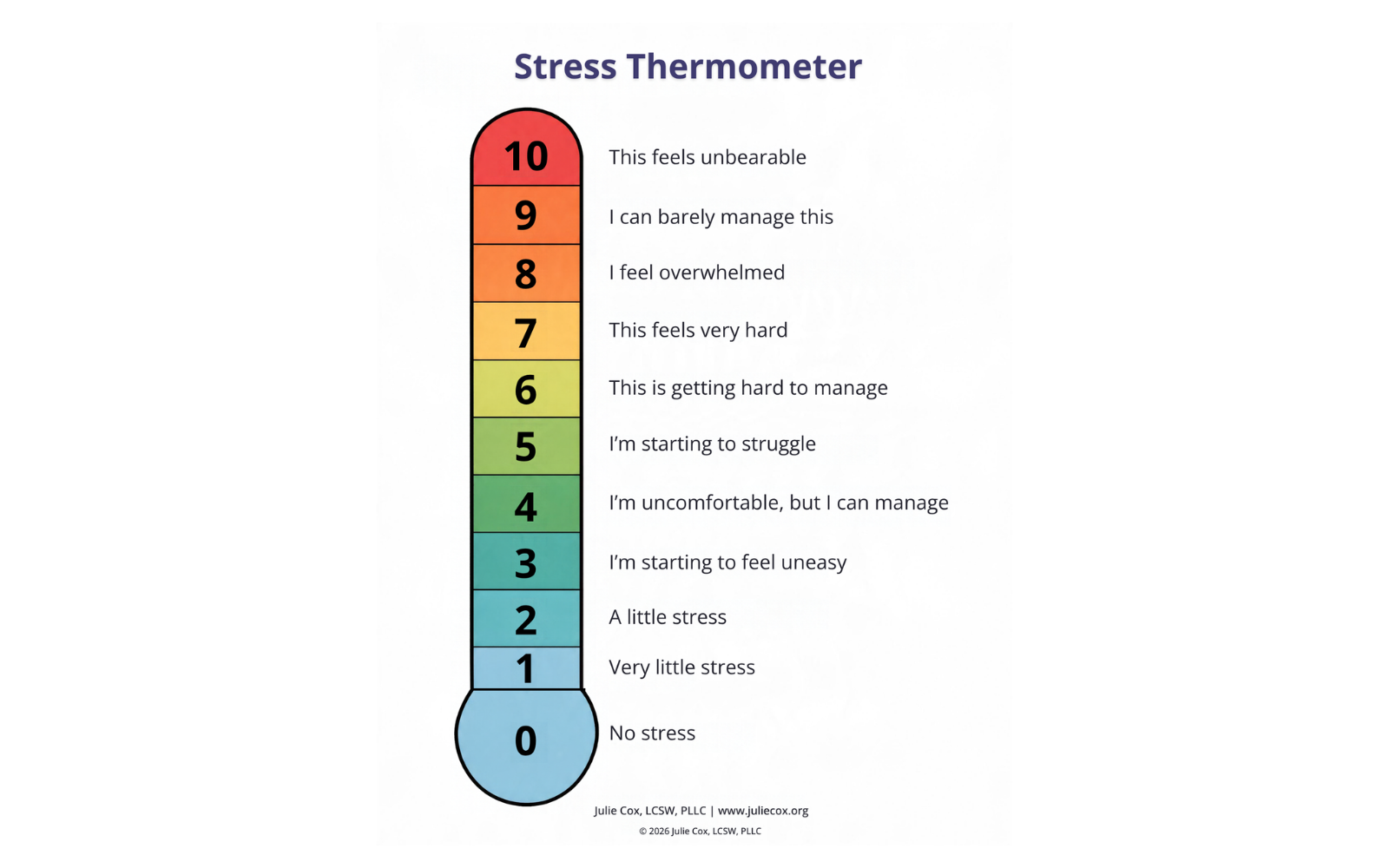
I use a Stress Thermometer to help families estimate how stressful that particular change might feel, including the young person’s own assessment whenever possible.
In my practice, I generally begin with a step estimated at 4 or below out of 10. If distress rises above 6, we reassess whether the step was too large, the timing needs reconsideration, or more support is needed.
These numbers are flexible clinical guides, rather than universal rules. We also consider how the young person recovers afterward and whether symptoms or daily functioning worsen more broadly. During OCD treatment, a temporary rise in anxiety does not automatically mean a step should stop; the treating clinician helps guide those decisions.
Keep the Stress Thermometer handy when considering a small next step, alongside guidance from your child’s treating clinician.
You Can Ask Less Today and Still Care About Their Future
You can understand why easing expectations may help and still feel worried about doing it. These decisions are difficult because you want your child to have a fuller, more independent life.
What you ask of your child today can change as their needs change. You do not have to decide their entire future when deciding what is manageable right now.
I provide PANDAS/PANS therapy and parent support virtually throughout New York, Connecticut, Florida, and Delaware. Our work can include understanding symptoms, adjusting expectations, and supporting you through the emotional strain of these decisions.
Click to button below to contact me to learn more about support and availability.

Julie Cox, LCSW is a fully licensed therapist with over 25 years of experience supporting children, teens, parents, and adults in New York, Connecticut Florida and Delaware.
She specializes in working with families navigating PANDAS and PANS, offering child- and parent-centered support based on co-regulation, nervous system education, and evidence-based approaches for anxiety, OCD, emotional regulation, and demand avoidance.
She helps parents feel more empowered and supported while caring for children experiencing neuroinflammatory symptoms.